


Collecting client reviews as a freelancer: how to build trust online
As a freelancer, you don't have a big marketing budget or a well-known brand name to fall back on. What you do have is the experience of clients who have already worked with you. Those stories are incredibly valuable, because people trust other people far more than they trust a business. An honest review from a happy client does more for you than the most polished text on your homepage.
When should you ask for a review?
Timing matters a lot when it comes to asking for reviews. The best moment is right after a successful project, when your client is still enthusiastic and the results are fresh in their mind. Wait too long, and that energy fades. What felt like a natural conversation then becomes an awkward follow-up request.
Send a short, personal email. Thank your client for the collaboration and ask if they have a few minutes to leave a quick review. Include a direct link, because the easier you make it, the more likely they are to actually follow through.
Where should you collect reviews?
There are a few places where reviews really make a difference:
- Google Business Profile – Google reviews show up directly in search results and on Maps, which also helps your local visibility. We covered how to set up your Google Business Profile properly in an earlier post.
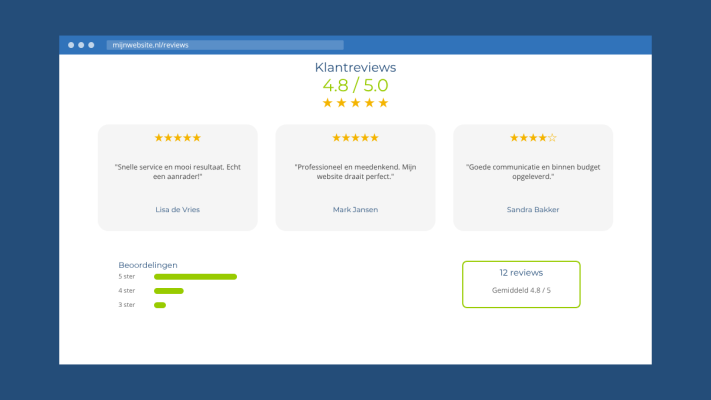
- Your own website – Pick a few strong quotes from clients and place them on your homepage or a dedicated testimonials page. Include a name, job title, or company name to make it feel real and trustworthy.
- LinkedIn – A recommendation on LinkedIn carries extra weight because it's tied to a real account. Potential clients can click through and see who the reviewer is, which adds another layer of credibility.
What if someone doesn't know what to write?
A lot of people genuinely want to leave a review but freeze when faced with a blank text box. Make it easier by giving them a few pointers in your email. Something like: what was your situation before we worked together, what did the project deliver for you, and would you recommend me to others?
You're not scripting their response, just giving them a starting point. It makes the process easier for them and results in something more specific and useful for you.
Use reviews strategically on your website
A review buried on a separate page doesn't do much. Place your strongest quotes in high-visibility spots: near the top of your homepage, next to a contact form, or on a specific services page. Visitors who are on the fence about reaching out are often nudged by reading how others experienced working with you.
Match reviews to the relevant service. A testimonial about a webshop you built belongs on your webshop services page, not scattered somewhere general.
Always respond to reviews
When you receive a review on Google, always respond, even briefly. Thank the client by name and add something personal about the project you worked on together. It shows you're engaged and gives potential clients a sense of how you treat people.
Collecting reviews doesn't have to be complicated. It starts with simply asking, at the right time, in a low-pressure way. Most happy clients are glad to help you out, as long as you make it easy for them.
Rather have it done than figure it out yourself?
I help businesses in Groningen, across the Netherlands and abroad with exactly this kind of question. Tell me briefly what you need and you will hear back within one working day.
Continue reading