
What is an SSL certificate and why does your webshop need one?
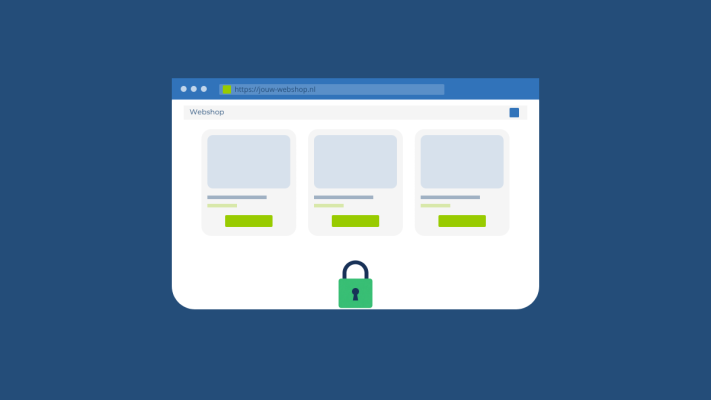
If you run or are setting up a webshop, you'll come across the term SSL certificate sooner or later. You've probably noticed that some websites start with https:// while others still use http://. That small difference matters more than most people realise.
What does an SSL certificate actually do?
SSL stands for Secure Sockets Layer. An SSL certificate encrypts the connection between your website and your visitor. This means that any data exchanged, such as login details, delivery addresses or payment information, cannot easily be intercepted by third parties.
If your website has a valid SSL certificate, visitors will see a padlock icon next to your domain name in the browser, and your address will start with https://. Without a certificate, browsers display a warning that the connection is not secure. That warning alone is enough to make most visitors leave immediately.
Why does it matter so much for a webshop?
When running a webshop, you're asking visitors to hand over sensitive information, including their name, address, email and payment details. Without SSL, that data is unprotected. This isn't just a security risk for your customers, it can also put you in breach of GDPR regulations that apply across Europe, including in the Netherlands.
On top of that, Google actively favours websites using HTTPS and ranks them higher in search results. The technical basics of your site have a real impact on how easy you are to find online.
What types of SSL certificates are there?
There are three main types, each with a different level of verification:
- Domain Validated (DV): the most common and affordable option. Only your domain name is verified. For most small webshops, this is more than enough.
- Organization Validated (OV): your business details are also verified. Takes a bit more time to obtain, but adds a layer of credibility.
- Extended Validation (EV): the highest level of verification. Previously displayed a green bar in the browser, though this is less visible in modern browsers. Mostly used by banks and large retailers.
For most starting webshops, a DV certificate is perfectly fine. Many hosting providers include a free SSL certificate through Let's Encrypt. Check with your hosting provider whether this is already set up for your domain.
How do you know if your webshop already has SSL?
Go to your own website and look at the address bar. Do you see a padlock and does the address start with https://? You're in good shape. If you see a warning message or your address still starts with plain http://, this needs to be sorted as soon as possible.
Also watch out for mixed content. This happens when your page loads over HTTPS, but certain images or scripts are still being loaded over HTTP. Browsers will still flag this as a potential issue. The fix is to update all internal references within your website to use HTTPS.
Don't want to deal with the technical side yourself?
That's completely understandable. Installing an SSL certificate, fixing mixed content issues and setting up proper redirects from HTTP to HTTPS is technical work. If you'd rather have it handled properly, I can take care of it as part of a maintenance check or when launching your webshop.
A secure connection is one of the first things to tick off before you go live, and it's one of those things that's much easier to set up from the start than to fix later. Get it right early and you won't have to think about it again.
Rather have it done than figure it out yourself?
I help businesses in Groningen, across the Netherlands and abroad with exactly this kind of question. Tell me briefly what you need and you will hear back within one working day.
Continue reading