


When does a custom webshop make more sense than Shopify or WooCommerce?
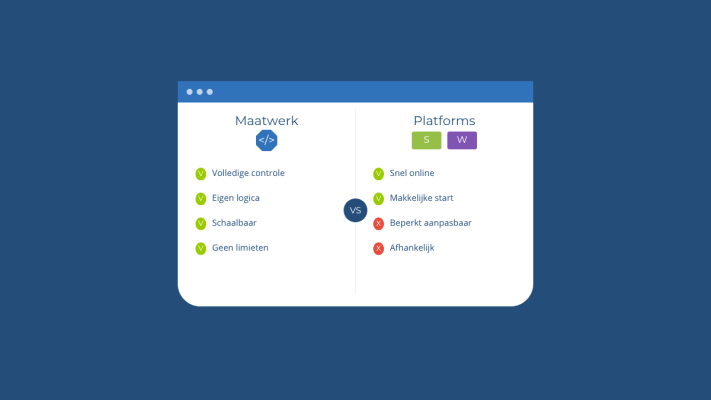
When most people think about starting an online store, Shopify or WooCommerce are usually the first names that come up. And honestly, that makes sense. They're accessible, well-documented, and you can get up and running quickly. But fast and easy doesn't always mean smart in the long run. Sometimes a custom-built webshop is simply the better choice, and it has nothing to do with overcomplicated ambitions or an oversized budget.
What do you actually get with an off-the-shelf platform?
Shopify and WooCommerce are built for a wide audience. That's their strength, but also their limitation. You're working within the boundaries the platform sets. Want something it doesn't support out of the box? You'll need a plugin, a paid extension, or you'll end up changing how you work to fit the system. That last one is where things can quietly go wrong.
On top of that, Shopify comes with monthly subscription fees, transaction costs if you don't use their own payment provider, and the features you actually need often push you toward a more expensive plan. WooCommerce is technically free, but hosting and plugins add up faster than most people expect.
When does a custom webshop actually make sense?
A custom-built store isn't the right fit for everyone. But there are situations where it's genuinely the smartest investment you can make.
- You have a complex product catalog. Products with many variants, a custom configurator, or an ordering process that doesn't match the standard flow, these are the kinds of things that quickly push standard platforms to their limits.
- You need to connect with existing systems. If you're already working with accounting software, an inventory system, or a CRM, custom development makes those integrations far more reliable than stitching together a handful of third-party plugins.
- You want full control over your data. With Shopify, your data lives on their servers, under their terms. With a custom solution, you decide where your data is stored and who can access it.
- You're planning to grow quickly. A platform that fits today might hold you back in two years. Custom-built solutions scale the way you need them to, without depending on someone else's product roadmap.
- Performance and user experience matter to you. We've written before about how website speed directly affects your revenue. With a custom build, you have full control over the technical foundation, without carrying the weight of features you don't use.
What about the cost?
A custom webshop costs more upfront, that's just honest. But run the numbers on what you'd spend over the next three years on subscriptions, plugins, and the time lost working around platform limitations. For a lot of growing businesses, custom development starts looking a lot more reasonable.
You also get something that's actually yours. No lock-in, no monthly dependency on a platform that can raise its prices or drop a feature without warning.
Shopify and WooCommerce aren't bad options
That's worth saying clearly. If you're just starting out, working with a limited budget, and selling a relatively straightforward range of products, Shopify or WooCommerce is a perfectly solid starting point. There's no rule that says every business needs to begin with a custom build.
But if you already know your needs don't fit neatly into a standard setup, or if you keep running into the edges of what your platform can do, it's worth making that decision deliberately. It's a lot easier to choose the right foundation from the start than to rebuild everything later.
Not sure which direction fits your situation? Feel free to get in touch and we can figure out what actually makes sense for you.
Rather have it done than figure it out yourself?
I help businesses in Groningen, across the Netherlands and abroad with exactly this kind of question. Tell me briefly what you need and you will hear back within one working day.
Continue reading