


Landing page or regular web page: when do you use which?
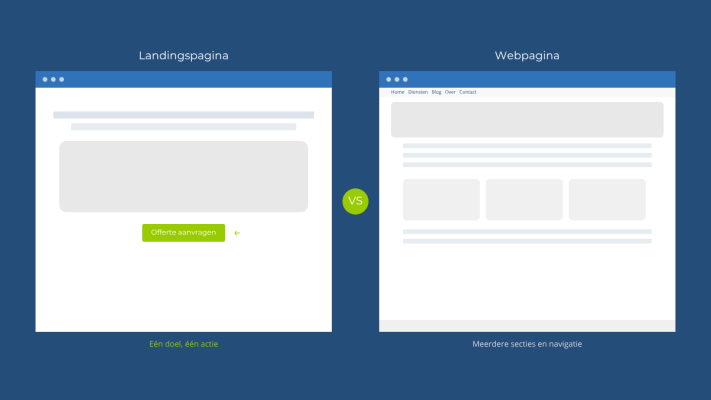
If you have ever set up a website or run an online campaign, chances are you have come across the term 'landing page'. But what exactly is it, and how does it differ from a regular page on your site? The short answer is: quite a lot, and understanding that difference can really help your business.
What is a regular web page?
A regular web page is part of your website as a whole. Think of your homepage, your about page, your contact page or a blog post. These pages each serve their own purpose, but they work together as a whole. They are connected through a navigation menu and give visitors the freedom to browse, compare and decide for themselves where they want to go.
The goal of a regular web page is to inform and orientate. You tell people who you are, what you do and how they can reach you. There is no pressure, no specific action you are pushing the visitor towards.
What is a landing page?
A landing page is a page with one clear goal: getting the visitor to take a specific action. That could be requesting a quote, signing up for a newsletter, buying a product or booking a free consultation.
What sets a landing page apart is its focus. There are no distractions. No navigation menu, no links to other pages, no unnecessary information. Everything on the page is aimed at that one action, known as the call-to-action.
Landing pages are often used alongside advertisements, such as Google Ads or a Meta campaign. Someone clicks on your ad and lands on a page that matches exactly what the ad promised. That increases the chance of them actually following through.
When do you use which?
- Regular web page: for your standard website content, so visitors can get to know your business and easily get in touch.
- Landing page: for a specific campaign, promotion or offer where you want the visitor to do one particular thing.
Say you are a photographer running an autumn family portrait promotion. You would create a separate landing page for that offer, with a strong image, a short description of the deal and a button to book directly. You link to that page from your ad, not your homepage.
Does it actually make a difference?
Yes. A well-built landing page can significantly improve your conversion rate. If you send someone from an ad to your homepage, there is a good chance they will get distracted and leave. Send them to a focused landing page and the message is clear, making it much easier for them to take action.
That does not mean landing pages are always necessary. For organic traffic, people who find you through Google, a well-structured website with clear pages usually works just fine. But as soon as you start running ads or want to push a specific offer, a landing page is almost always the smarter choice.
What does it take to do this properly?
A landing page does not have to be expensive, but it is worth thinking it through. The copy, the design and the technical side all need to be right. A page that looks unprofessional or loads slowly will do more harm than good. We wrote earlier about how website speed directly affects your revenue, and that applies to landing pages just as much.
Not sure whether a landing page makes sense for your situation, or want to know what it would look like in practice? Feel free to get in touch. I am happy to think it through with you.
Rather have it done than figure it out yourself?
I help businesses in Groningen, across the Netherlands and abroad with exactly this kind of question. Tell me briefly what you need and you will hear back within one working day.
Continue reading